How to transition your pet to raw food
Simple Raw Feeding Start
A practical guide for moving your dog or cat onto raw food.
Start Slowly
Watch Their Response
Slow Down If Needed
Calculate Amounts
Choose Meals
Start slowly. Watch your pet. Adjust as needed.
Raw feeding does not need to be complicated.
Some dogs and cats move across to raw food quickly, while others do better with a slower, more gradual change. The key is to go at your pet’s pace and monitor the things that matter: appetite, stool quality, energy and body condition.
RoxBox makes it easier to start with biologically appropriate raw dog and cat food, practical feeding guidance, and simple next steps.
A simple 7-day transition guide
Use this as a starting guide, not a strict rule. Some pets may move faster, while others may need 10–14 days or longer. When changing to raw food, many pets do best when you keep the first few days simple.
For dogs, a simple single-protein option such as 100% Chicken or 100% Duck can be useful at the start. Once your pet is comfortable, you can move onto a Complete Meal using the same protein, such as Chicken Complete Meal or Duck Complete Meal. From there, you can gradually add more variety from the other Complete Meals available.
For puppies, kittens, fussy eaters, seniors or pets with sensitive digestion, take extra care and move more slowly. If your pet is very young, has a medical condition, or has ongoing digestive issues, speak to your vet or a suitably qualified pet nutrition professional before making major diet changes.
If your pet is reluctant to eat, check that you are not overfeeding. Weigh portions carefully and use the RoxBox Feeding Calculator as a starting guideline.
Start simple, then add variety.

Day 1-2
Start gently. Mix a small amount of raw food with your pet’s current food and monitor appetite and stool quality. We commened starting with 100% Chicken or 100% Duck.
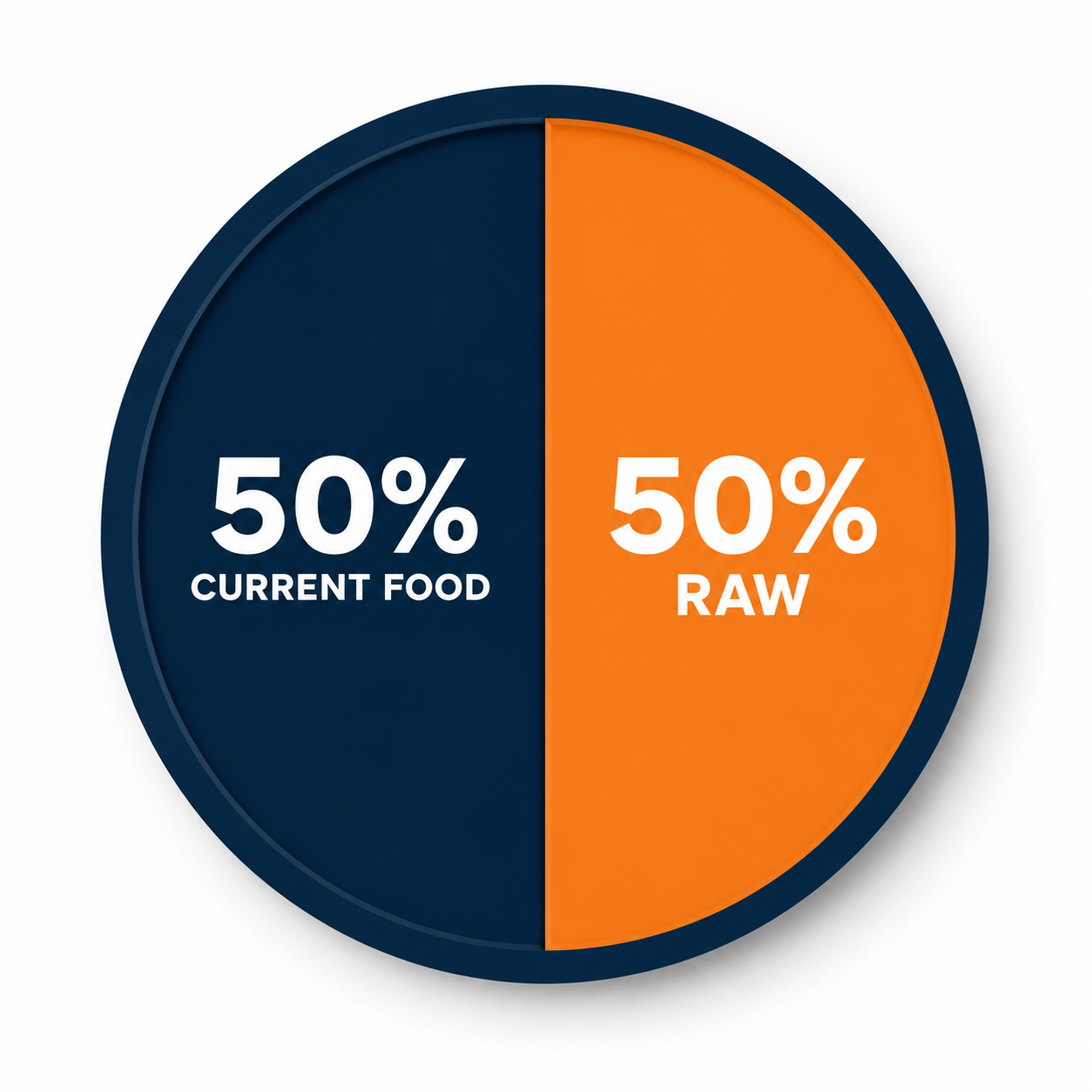
Day 3-4
Continue only if your pet is comfortable. If everything looks normal, increase the raw portion gradually while still using 100% Chicken or 100% Duck.
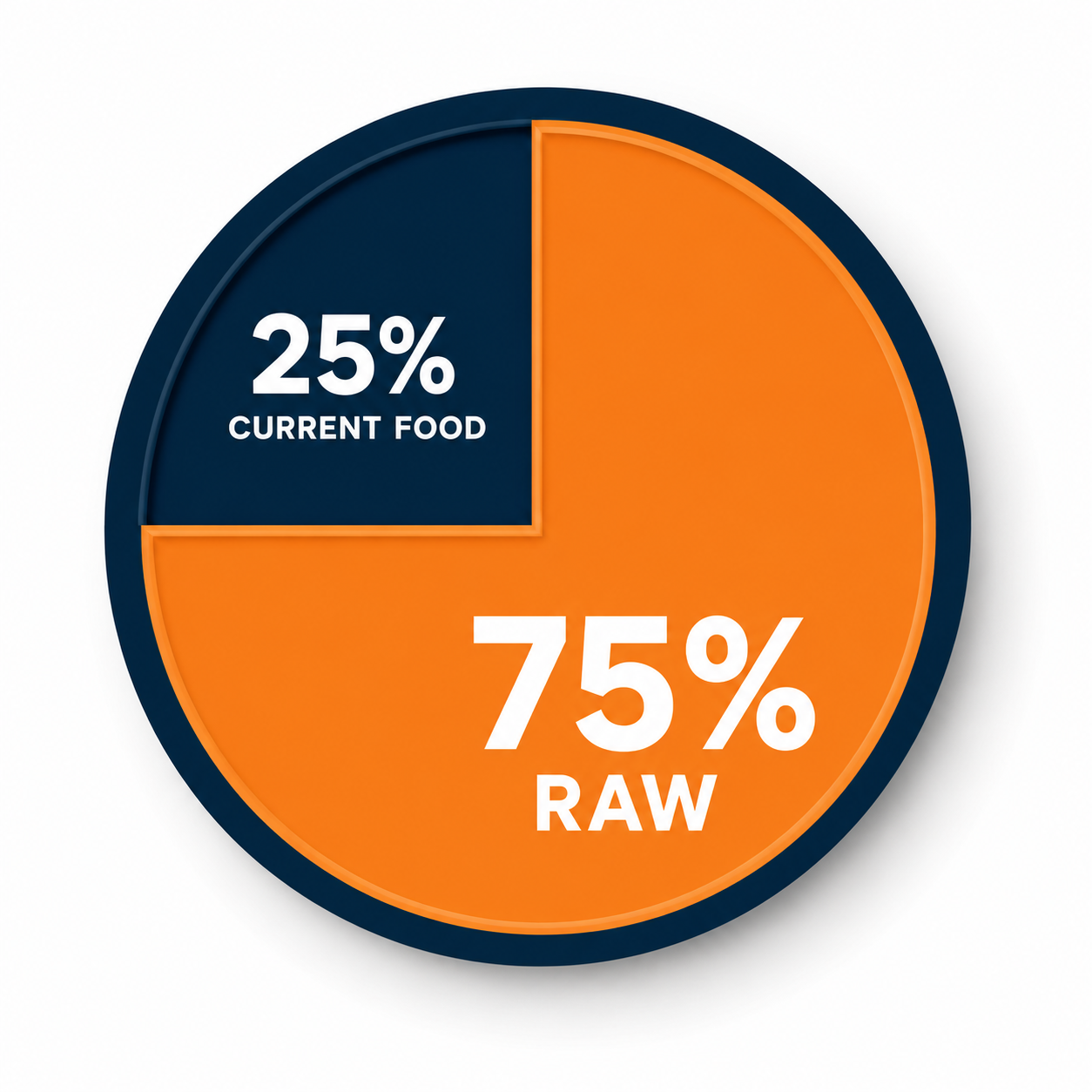
Day 5-6
You are nearly there. Slow down if stool becomes loose, appetite drops, or your pet seems uncomfortable. Start introducing the Complete Meal with the same protein used in 100% on Day 1-4 (Chicken Complete Meal or Duck Complete Meal)
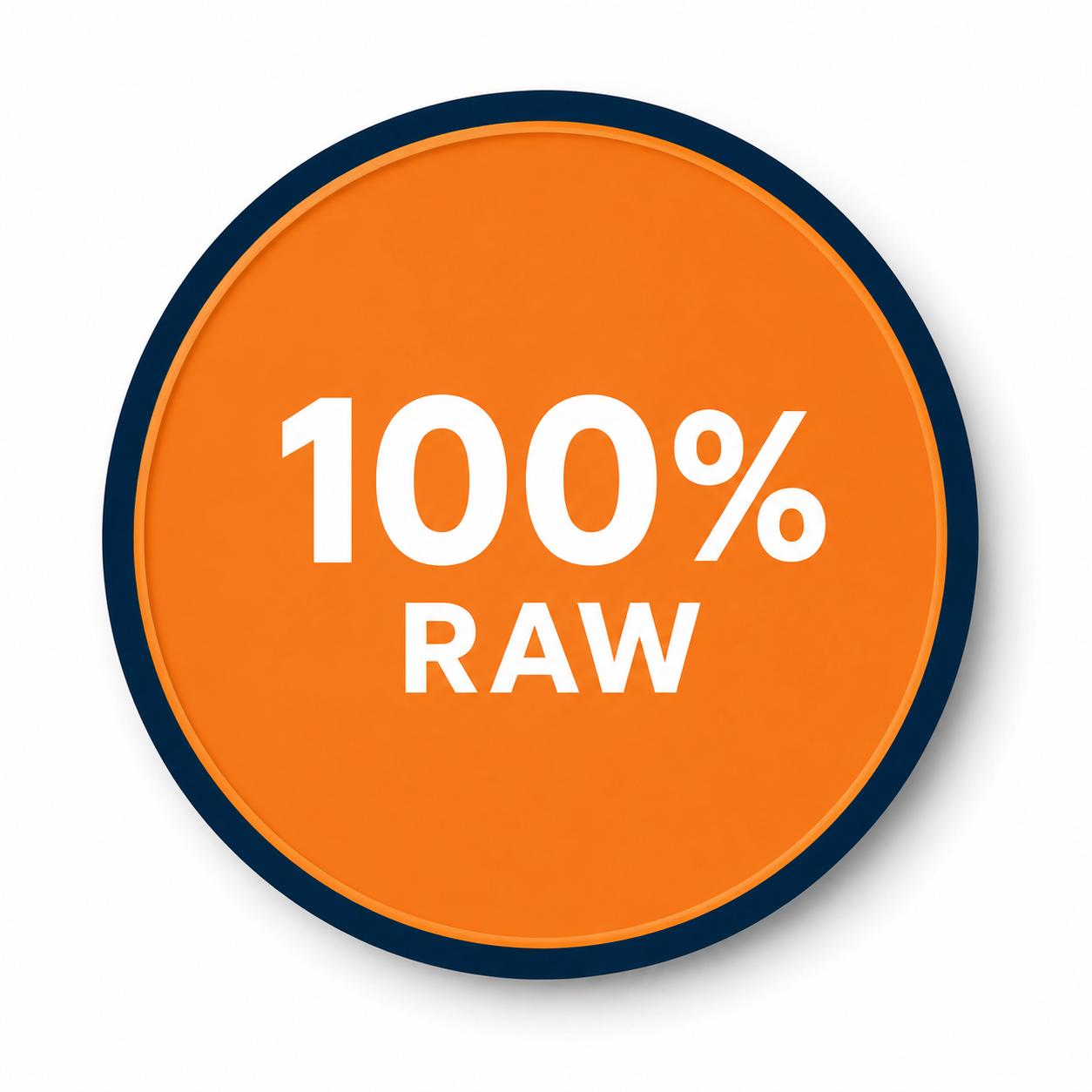
Day 7+
Once fully transitioned, use the RoxBox Feeding Calculator as a practical starting point and adjust gradually over time.
Introduce variety from the other Complete Meals.
Choosing raw food is a simple, natural step toward supporting your pet’s long-term health and everyday well-being.
What to expect when changing to raw food.
Every pet is different. Some transition smoothly, while others need more time. These are common things to watch during the change.
Some pets are excited immediately. Others may be cautious when they first smell or taste raw food.
Start with small portions and give your pet time to adjust. If your pet refuses food repeatedly, seems uncomfortable, or skips meals for longer than expected, slow the transition and ask for professional guidance if needed.
Stool quality can change during a food transition. Some pets may have softer stools for a short period while their digestive system adjusts.
If stool becomes very loose, watery, contains blood, or your pet seems unwell, stop the transition and contact your vet.
Pets eating raw food may drink differently because raw food naturally contains moisture.
This can be normal, but always make sure fresh water is available. A sudden major change in thirst should be discussed with your vet.
Keep raw food frozen until needed. Defrost safely in the fridge and serve in a clean bowl.
Do not leave raw food standing out for long periods. Once defrosted, keep it chilled and use it within a sensible timeframe.
Handle raw pet food with the same care you would use when handling raw meat in your own kitchen.
Wash your hands after handling, clean bowls after feeding, and wipe down surfaces used for preparation.
Slow down the transition if your pet develops loose stool, reduced appetite, vomiting, discomfort, or seems unsettled.
Move back to the previous step for a few days, reduce the raw portion, and increase more gradually once your pet is comfortable again.